

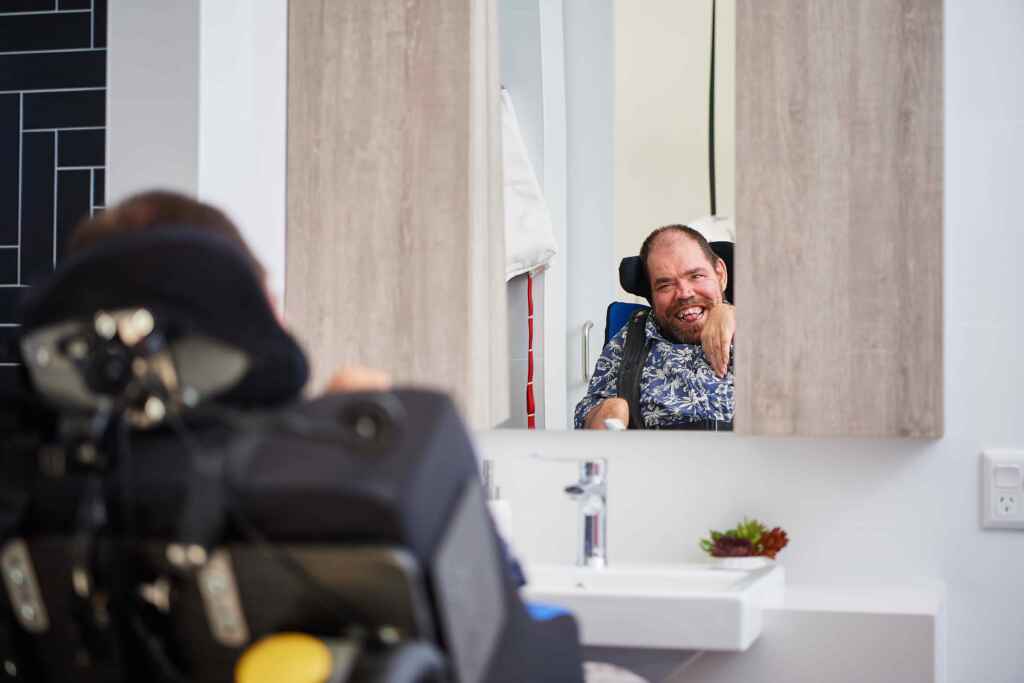
A tenant asks us to move a power point six inches to the left, so it’s within reach from their wheelchair. Simple request. Except we can’t do it. Not because it’s a bad idea, but because it would take the home outside its certified SDA design category.
That happens more often than you’d think, and it comes down to something worth clarifying: Accessible housing and SDA housing aren’t always the same thing and knowing the difference matters if you’re a participant, a family member, or a support coordinator trying to find the right home.
This article looks at what accessible housing means, how it differs from Specialist Disability Accommodation (SDA), and the less obvious problem at the centre of it: sometimes the very design features that make a home SDA-compliant are the same features that stop the home being accessible for the person actually living there.
What Is Accessible Housing? (Definition and Meaning)
In Australia, Accessible Housing is a broad, general term used to describe any home that’s been built or modified for people with mobility, sensory or cognitive impairments. That can mean anything from a house with a single step-free entry and wider doorways, right through to a fully wheelchair accessible home with hob-free showers, height-adjustable benchtops and reinforced ceilings for hoist installation.
The most common accessible housing guidelines and accessible housing standards in Australia come from:
- The National Construction Code (NCC) came into effect in 2022 and set a minimum level of accessibility (based on the Liveable Housing Design Silver level) for new homes in most states and territories, including features like a step-free entry, wider doorways and corridors, and a toilet on the entry level.
- The Liveable Housing Design Guidelines, a voluntary standard with three tiers (Silver, Gold and Platinum), used broadly across general housing, aged care and community housing, independent of the NDIS.
- The SDA Design Standard, an NDIS-specific standard that applies to a much narrower segment of the housing market. This standard sets the design requirements for Specialist Disability Accommodation (SDA).
The first thing worth getting clear: a home can be beautifully designed and genuinely accessible and not SDA. It may even be Gold or Platinum level under the Liveable Housing Design Guidelines, without being SDA. Accessibility is a design quality. SDA is a funding and certification status.
What Is SDA Housing?
Specialist Disability Accommodation (SDA) is a specific type of NDIS-funded housing for Participants with extreme functional impairment or very high support needs. Only around 6% of NDIS Participants are eligible for SDA funding, making SDA a highly specialised housing option rather than a general disability housing pathway.
For a dwelling to be classed as SDA compliant housing, it needs to be certified by an Accredited SDA Assessor against the SDA Design Standard and then enrolled with the NDIA.
There are four SDA design categories:
- Improved Liveability – for people with sensory, intellectual, or cognitive impairment.
- Robust – for people with complex behavioural support needs.
- Fully Accessible – for independent wheelchair users who can transfer themselves.
- High Physical Support – for people who need a hoist to transfer, and/or rely on life-support medical equipment requiring emergency backup power.
Certification happens in two stages: first at the provisional design stage, then again once the home is built. It covers 25 defined design elements throughout the home, from floor plans and door handles to kitchens, bathrooms and emergency backup power.
This is the key distinction: SDA is a certified, funded category tied to a specific dwelling. “Accessible housing” is just a description. A property can be one without the other, in either direction.
The two are not interchangeable. A property can be accessible without being SDA and it can be SDA without necessarily being accessible for a specific individual.
When Accessible Housing Isn’t SDA-Compliant
If you’re trying to find a wheelchair accessible house, it helps to know what separates an SDA compliant house from accessible housing in the broader sense, so you can look for the right option for your needs.
1. A highly accessible home may not attract any SDA funding. A home can tick every accessibility box: wide doorways, a hob-free shower, step-free entry, and still not qualify for SDA funding.
Accessibility features alone don’t make a property SDA compliant. Unless the dwelling has been through certification and enrolled with the NDIA, a Participant can’t put their SDA funding towards living in the home, no matter how accessible it looks on inspection.
2. “SDA” doesn’t tell you which category or whether it fits your needs. A property advertised as SDA might only be certified as Improved Liveability, which includes step-free entry but not the wheelchair access and circulation spaces the higher SDA categories require. So “SDA” on its own might not tell a wheelchair user what they need to know. The design category matters. A wheelchair user who assumes every SDA listing will suit them could easily be caught out.
3. Eligibility is narrower than the housing need. Many people need a wheelchair accessible home without meeting the NDIS eligibility criteria for SDA (extreme functional impairment or very high support needs). For that much larger group, the better housing option is accessible housing in the general market, not chasing SDA properties they may never qualify for.
4. SDA category fit doesn’t guarantee individual fit. This is one of the most important distinctions to understand. Fully Accessible and High Physical Support homes are designed around specific accessibility requirements, including wheelchair access, provision for hoisted transfers or backup power for medical equipment. However, individual needs don’t always fit neatly inside those categories. So, an SDA certified home might be a very good match for one person and only a partial fit for another, depending on their specific functional needs.
5. Marketing language is inconsistent. Terms like “accessible disability housing,” “accessible living,” “SDA compliant house” and “NDIS compliant housing” get used loosely, interchangeably, or sometimes even incorrectly in property listings.
None of these terms guarantee NDIS SDA compliance. Before assuming a property is eligible for SDA funding, ask for clear information about the SDA design category, certification and NDIA enrolment status.
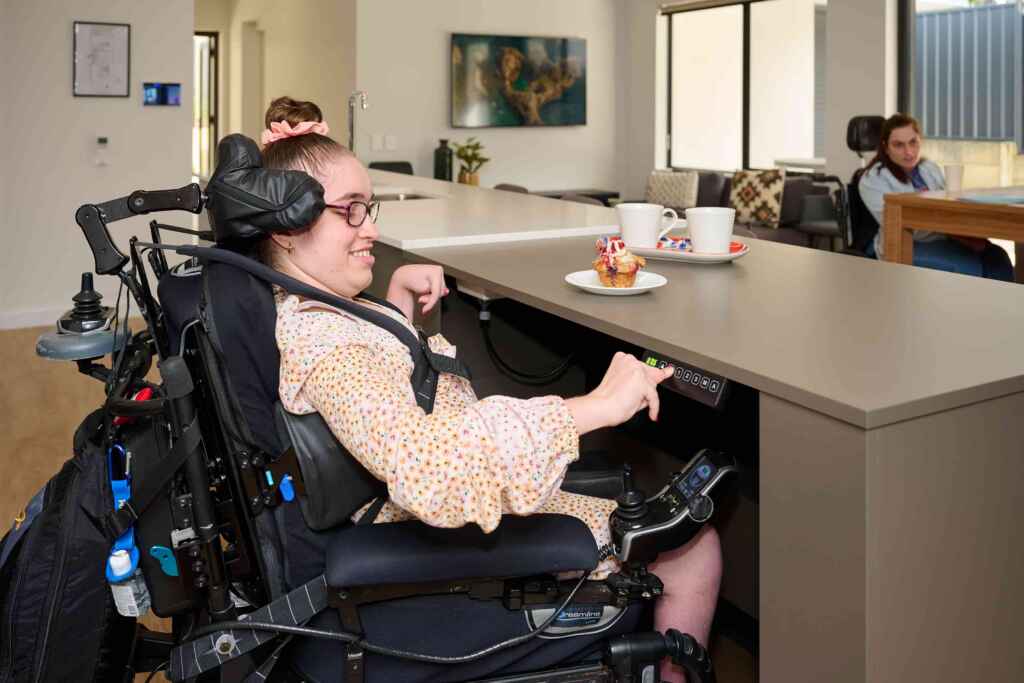
The Paradox: When SDA-Compliant Means Less Accessible for You
This is the part that can be surprising. Many Participants wrongly assume that SDA automatically means “designed around me.”
The SDA Design Standard aims to make a dwelling certifiable and meet generic disability standards. It is not necessarily intended to perfectly meet every individual’s specific needs. That distinction matters because SDA funding is attached to the property itself, while the people living there can change over time.
So, the Design Standard sets fixed specifications for accessible home plans including height ranges, clearances, power point placements, all designed to support “a person within a particular category” rather than being tailored to a specific person who happens to move in.
In practice, that means requests from Participants like the following may be rejected, even when the request would better suit that Participant’s needs:
- Repositioning a power point to suit a person’s reach range from their chair.
- Adjusting a vanity basin or bench height to suit the resident’s height and functional needs.
- Changing a light switch height or placement to match the person’s reach from a seated position.
- Changing the direction a door swings or slides, internally or externally, to better suit the resident’s mobility and access needs.
None of these requests get rejected because they’re bad ideas. The concern is that stepping outside the certified wheelchair accessible home design can put the property’s certification or SDA enrolment at risk, which affects funding for the current tenant and for whoever moves in next.
For a Participant, that’s a genuinely disorienting experience.
The NDIS is built around individualised support, yet the housing compliance checklist underneath it is standardised, tied to the dwelling rather than the person in it. Those two things collide most noticeably in personal spaces of the home including the bathroom, the kitchen and the bedroom where the standard requirements must remain intact.
To be clear, this isn’t a case of providers being unwilling, or the SDA design being badly thought through. It’s a balancing act between individualised care and the need for consistent, certifiable housing stock in a market that serves a wide range of people over time. Understanding why these limits exist is the first step to knowing what can still be adapted.
In most cases, the gap can be addressed through non-structural items outside the certified design, like furniture, portable equipment, certain fixtures, or through Low Cost AT funding and SIL supports that address the individual’s specific needs.
How to Find Accessible Housing (Practical Guide)
If you’re looking to rent a wheelchair accessible home, here’s a practical way to approach the search:
1. Be clear on your own needs first. Start with your personal needs rather than a housing label. Work with an Occupational Therapist (OT) to document the specific features you need, such as bench heights, turning circles, hoist installation and rail placement. That should be your reference point when assessing a property, not the SDA category name.
2. Verify the SDA status. Don’t rely on the listing description alone. If a property is listed as SDA, you can ask for its SDA enrolment details and design category. You can also check it via NDIS-registered SDA provider listings.
3. Don’t assume “accessible” and “SDA” are interchange when searching. If you’re searching broadly for accessible housing rather than SDA specifically, you’ll find a much wider pool of properties to consider. These can include homes built to Liveable Housing Design Gold or Platinum standards, which may also suit your needs and be available sooner, given waiting times sometimes associated with limited SDA housing.
4. Ask what’s fixed and what’s flexible. For SDA properties, ask the provider directly which features can be adjusted to meet your specific needs and what has to stay for compliance.
5. Look beyond SDA if you don’t meet the eligibility threshold. If you don’t meet the eligibility criteria for SDA funding, broaden your search to accessible housing in the general and community housing market. Alternatively consider Home Modifications funding to adapt a (rental or owned) property to suit you.
6. If building or renovating, engage the right specialists early. An accessible home builder or Occupational Therapist who specialises in Home Modifications will understand both the Liveable Housing Design Guidelines and the SDA Design Standard and can help you determine which housing pathway, or both, is best for your unique circumstances.
Starting with a thoughtfully designed wheelchair accessible house plan means the right accessibility features are considered from the beginning, rather than being added later. Getting the right advice early could save you costly changes, or certification issues down the track.
Frequently Asked Questions
What is the difference between accessible housing and SDA housing?
Accessible housing is a general description of any home designed to be usable by people with disability. SDA (Specialist Disability Accommodation) is a specific NDIS-funded and certified housing category for Participants with extreme functional impairment or very high support needs. A home can be accessible without being SDA, and a home can be SDA without necessarily suiting every individual’s specific accessibility needs.
Does “wheelchair accessible” mean a property is SDA-compliant?
No. A wheelchair accessible home may have wide doorways, step-free access and an accessible bathroom without ever having been certified against the SDA Design Standard or enrolled with the NDIA. SDA compliance requires formal assessment and certification, it is not established by accessibility features alone.
Who is eligible for SDA housing?
SDA is only available to NDIS Participants assessed as having extreme functional impairment or very high support needs – roughly 6% of NDIS Participants. If you don’t qualify, your NDIS plan won’t fund SDA, even if you need significant accessibility supports.
If I don’t qualify for SDA, can I still find accessible housing?
Yes. Many people needing to rent a wheelchair accessible house don’t require SDA. Accessible rental housing, homes built to Liveable Housing Design Gold or Platinum, and properties adapted through Home Modifications funding are all valid paths outside the SDA system.
Why can’t SDA providers always make individual requests like moving a power point?
SDA properties are certified against fixed design specifications set out in the SDA Design Standard. Changes that fall outside of those specifications, even when they’d better suit a tenant’s needs, can put the dwelling’s certification and ongoing SDA enrolment at risk, which can affect funding for current and future tenants.
What are the four SDA design categories?
Improved Liveability (sensory, intellectual or cognitive impairment), Robust (complex behavioural support needs), Fully Accessible (people requiring assistance with mobility such as a wheelchair or assisted walking device), and High Physical Support (wheelchair users who also utilise a hoist for transfers and/or life-support equipment needs).
How do I check if a property is genuinely SDA-enrolled?
Ask the provider directly for the SDA enrolment details and confirmed design category or check NDIS-registered SDA listings. Don’t rely solely on marketing terms such as “accessible” or “disability accessible housing” in a listing description.
Can an accessible home be upgraded to SDA later?
Sometimes, however the property still has to go through the full SDA Design Standard certification and NDIA enrolment process. Accessibility features do not automatically make a home eligible for SDA on its own.
What should a wheelchair accessible housing design guide provide?
A genuinely reliable design guide for wheelchair accessible housing should clearly distinguish between general accessibility principles (such as those from the Liveable Housing Design Guidelines or NCC accessible housing provisions) and the NDIS-specific SDA Design Standard, since they serve different purposes and apply to different eligibility groups.
What should I look for in a wheelchair accessible house plan?
A good wheelchair accessible home plan should cover the practical basics: step-free entry, doorway widths, circulation and turning space, accessible bathrooms and kitchens, suitable reach ranges, and easy movement between the key areas of the home.
What is NDIS compliant housing?
“NDIS-compliant housing” is not a formal NDIS housing category, so the term can be so misleading. NDIS compliance depends on what type of support or housing is being provided and the specific requirements that apply. A property can be accessible, disability-friendly or designed with an NDIS participant in mind, without being an officially recognised NDIS housing type.
It’s more accurate and useful, to describe a property by its accessibility features, design standard, or relevant housing category.
Sana Living specialises in helping people find homes to meet specific accessibility and lifestyle needs. Explore our range of disability housing online, or contact our friendly team to discuss your requirements.