


Finding the right living arrangement when you are an NDIS Participant can feel overwhelming. You’ve probably heard terms such as “Supported Independent Living” and “Specialist Disability Accommodation” thrown around, but what do they actually mean for you?
If you’re exploring housing options, Sana Living is here to help you understand how these supports work and how they might fit into your daily life.
Supported Independent Living, or “SIL,” is one of the most significant supports available through the NDIS. It’s designed to assist people with daily tasks, so they can live with greater independence.
While Sana Living is exclusively focused on premium Specialist Disability Accommodation (SDA) design and delivery, SIL Supports often operate within our SDA homes. The funding and service delivery of SIL supports in our homes rests with each individual SIL registered provider.
Our role is to ensure the physical environment enables those supports to be delivered at the highest standard.
With that said, let’s explore how SIL works under the NDIS, the key differences between supported living and disability accommodation and what this means for you in practice.
What Is Supported Independent Living?
The National Disability Insurance Agency (NDIA) defines Supported Independent Living (commonly referred to as SIL) as help or supervision with daily tasks in your home to help you live as independently as possible, whilst building your skills.
Think of SIL as the people who support you, rather than the building you live in. These are the disability support workers who help with personal care, cooking meals, medication management, and other daily living tasks.
The level of support varies depending on your needs. Some Participants receive 24/7 active assistance, whilst others might receive the minimum 8 active hours of assistance with overnight support.
Support Services Included in SIL
SIL funding can cover a wide range of support services, tailored to your individual needs. Personal care tasks – such as showering, dressing, and grooming – are common supports. Your support workers can help with cooking meals, grocery shopping, and other household tasks to keep your home environment safe and comfortable.
Medication management is another crucial service. This is making sure you take the right medications at the right times.
Some Participants might also receive support with helping to get to and from appointments.
The beauty of SIL is that it’s individualised. Your support package reflects your unique requirements, not a one-size-fits-all approach.
Role of a Support Coordinator in Your SIL Journey
Your Support Coordinator plays a key role in applying for SIL funding. They’ll help you gather the evidence needed to demonstrate your eligibility. This evidence might include reports from therapists, doctors, or other health professionals.
Your Support Coordinator can help you source an Allied Health Professional (usually an Occupational Therapist or Physiotherapist) who is experienced in addressing Home and Living requirements. They will prepare a comprehensive Functional Capacity Assessment report using all of the evidence provided, to support your SIL funding application.
Your Support Coordinator will work with SIL Providers to receive quotes for the SIL support you need and, once you have selected a SIL Provider, your Support Coordinator will submit a request to the NDIS for you to access Home and Living supports. The NDIA Home and Living team then assess whether the support is reasonable and necessary for your circumstances and may decide that SIL is right for you.
Specialist Disability Accommodation and SIL: How They Work Together
It’s important to understand that SDA and SIL are completely separate supports.
Specialist Disability Accommodation (SDA) funds the actual dwelling – the bricks-and-mortar and specialised building designed for people with extreme functional impairment or very high support needs.
SIL funds the support workers who help you with daily living inside that dwelling.
You can access SDA without SIL, or SIL without SDA. However, approximately 65% of Participants with SDA funding also have SIL funding in their plan. This makes sense when you consider that people who need highly accessible housing often also need significant daily support. If you think you (or someone you have in mind) may be eligible for SDA funding, read more about this here: NDIS & SDA Eligibility Perth – Are You Eligible? | Sana Living
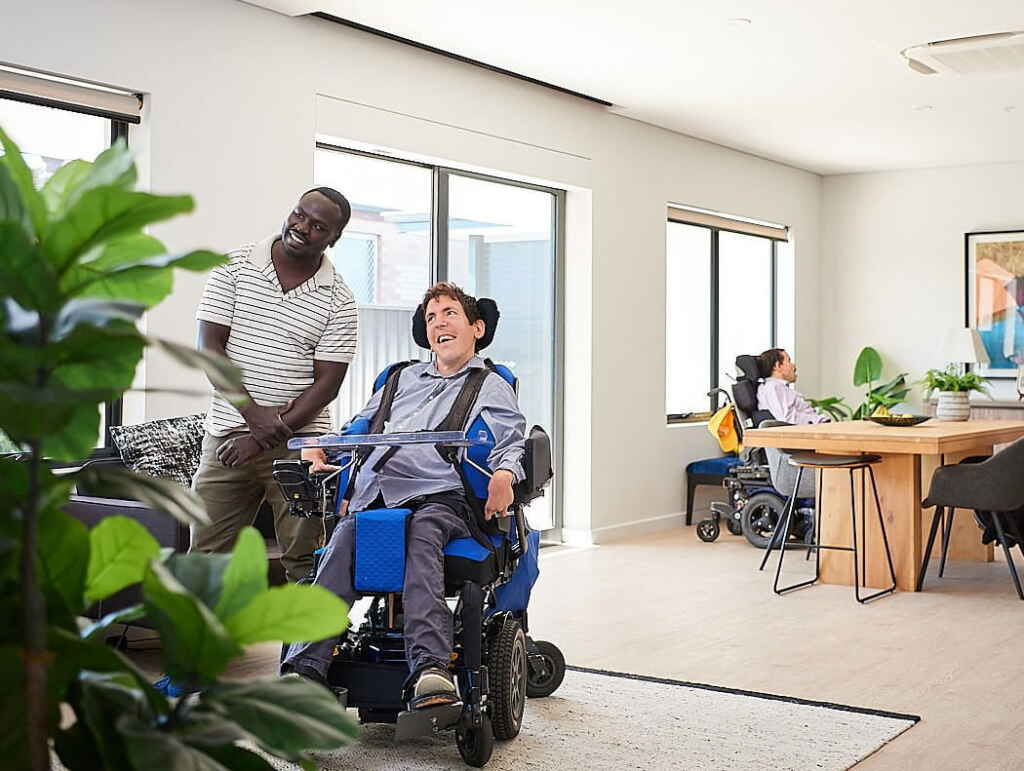
Sana Living’s disability homes are purpose-built SDA properties across Perth, Brisbane, and Adelaide. These homes provide a safe, accessible, and comfortable environment that supports independence and personal choice. Residents can connect with others, develop skills, and enjoy a sense of community while living in a modern, luxurious space, designed for daily life and personal growth.
With Sana Living, residents also have the freedom to select their own SIL provider, ensuring the support they receive meets their individual needs and choices.
How to Receive SIL Funding
The process to receive SIL funding follows several clear steps. First, you’ll need to demonstrate very high support needs. This means providing evidence that you require daily personal care, overnight supervision, or behaviour support to live safely.
Your Support Coordinator will help you complete the necessary paperwork and gather supporting documentation. Next, you’ll need to find a SIL provider who can meet your needs. They’ll develop a detailed quote and roster showing exactly what supports they’ll provide and when.
Understanding Your NDIS Plan and Core Supports Budget
SIL funding appears in your NDIS plan specifically for “the assistance with daily life tasks in a group or shared living arrangement” and can be found within your Home and Living budget.
The 2025-26 NDIS pricing arrangements set different rates depending on the support ratio and time of day.
Other support funding may be flexible, however SIL funding is usually a stated item because of its high cost. A stated item (or “stated support“) in NDIS funding is a specific, locked-in allocation of funds in a participant’s plan that must be used exactly as described.
Living Arrangements: Shared Home vs Living on Your Own
SIL can work in various living arrangements. In a shared home, you live with others and share the supports delivered by the SIL provider with them. This arrangement typically costs less per person because some of the support is shared. It can also provide built-in social connections and a sense of community.
If you live on your own – whether that’s an apartment, villa, or house – you may receive individual support. This offers maximum privacy but generally requires higher funding because you’re not sharing support costs but the NDIS only funds this if you need this support type, if it is value for money, and if it is safe for you.
Some Participants start living independently of their family home in shared homes and transition to individual living as their skills develop. Others prefer the community aspect of shared living for the long-term. There’s no right answer – it depends on your preferences, support needs, and funding.
Choosing the Right SIL Provider
Selecting a SIL provider is one of the most important decisions you’ll make. Here’s what to consider:
- Do they have experience supporting people with your specific disability or support needs?
- Can they provide support in your preferred location?
- Can they deliver the amount of support you need if you are sharing the support with others?
- Do they give you opportunities to select your support workers?
- How do they handle emergencies and after-hours support?
- How do they work with you when things go wrong?
- What’s their approach to skill-building, goal achievement, and promoting independence?
- Can you see their policies on Participant choice and control, Complaints, and Privacy?
- What do current Participants say about their services?
- How will they support you with implementing your positive behaviour support plan (if applicable)?
Find out as much as you can about potential providers, ask lots of questions, and trust your instincts. You’re choosing people who’ll be part of your daily life, so compatibility matters.
Your Next Steps Towards SIL
If you’re considering SIL, start by talking to your Support Coordinator about whether you might be eligible. Gather evidence of your support needs from your current support team. Research SIL providers in your area and visit their services if possible.
If you’re also looking at NDIS housing options, explore how SDA housing might work alongside your SIL supports. The combination of accessible, purpose-built housing with the right support team can genuinely transform your independence and quality of life.
Remember, accessing SIL funding takes time. The process involves multiple steps and can feel lengthy, but the outcome – living with the support you need in a place you choose – is worth the effort. We’re here to help you understand your options and find the right housing solution for your circumstances.
Frequently Asked Questions
What is Supported Independent Living in Australia?
Supported Independent Living (SIL) is NDIS-funded support that helps people with disabilities live as independently as possible on their own or in a shared home. It covers assistance with daily tasks like personal care, cooking, medication management and other tasks related to daily living.
Do I have to pay for SIL?
If you have SIL funding in your NDIS plan, the NDIS pays for your support workers. However, you’ll still need to pay rent for your accommodation (whether that’s SDA or general housing) and your everyday living expenses like food and utilities.
What is a SIL home?
While SDA describes the physical building of the home and SIL describes the care provided within that home (clearly separating the two), a SIL home is used to describe any dwelling that is not SDA in which SIL supports are delivered. The dwelling could be:
- A privately owned rental
- Public housing
- Community housing
- A home shared with others
How long can I stay in SIL?
There’s no time limit on SIL funding. As long as you continue to meet the eligibility criteria and the support remains reasonable and necessary, SIL can be included in your NDIS plan for the long-term. Your plan is reviewed regularly to ensure that supports still match your needs.
To find out about other types of independent or individual disability living supports, you can visit this page about individualised living options.
The information within this blog was accurate when we published it and is subject to change without notice.